
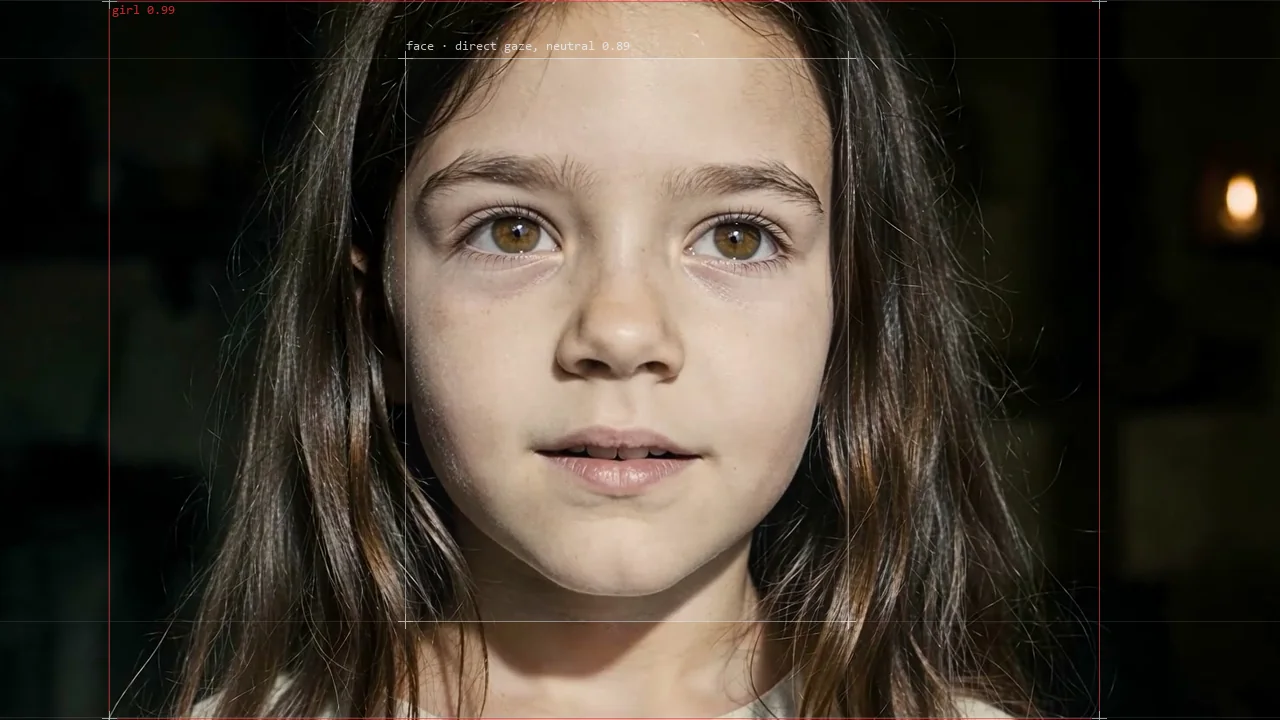
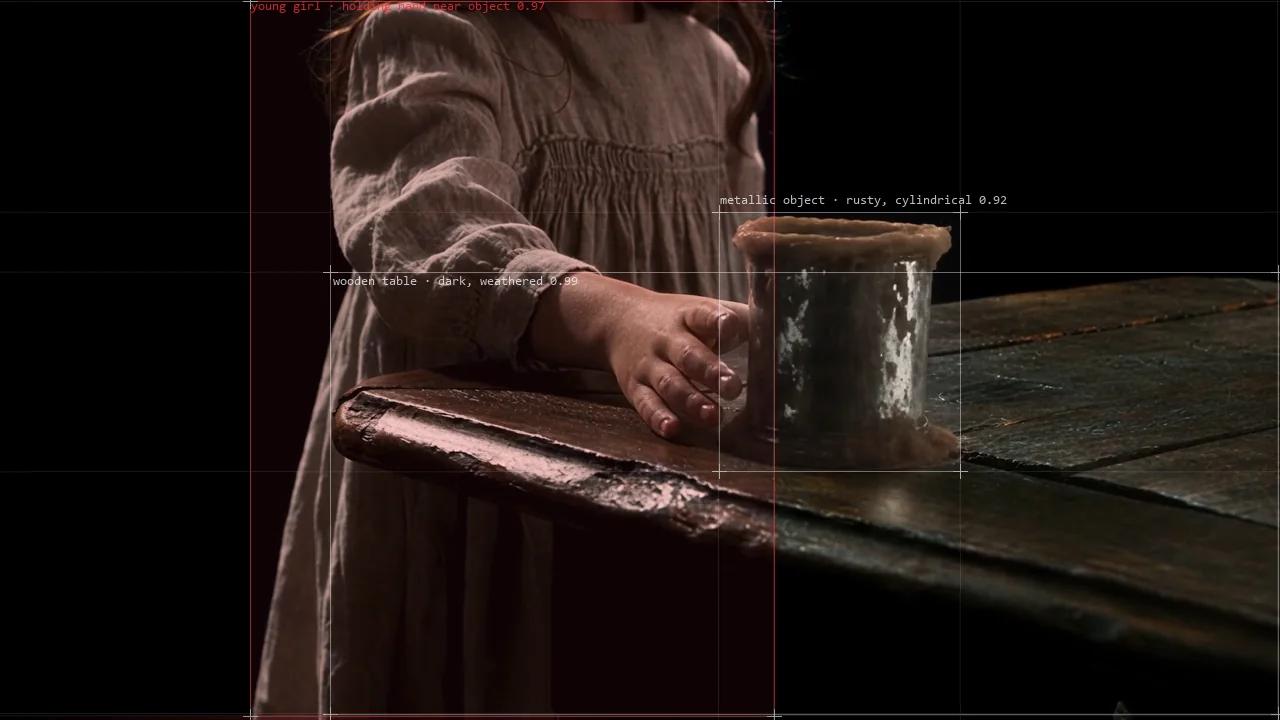
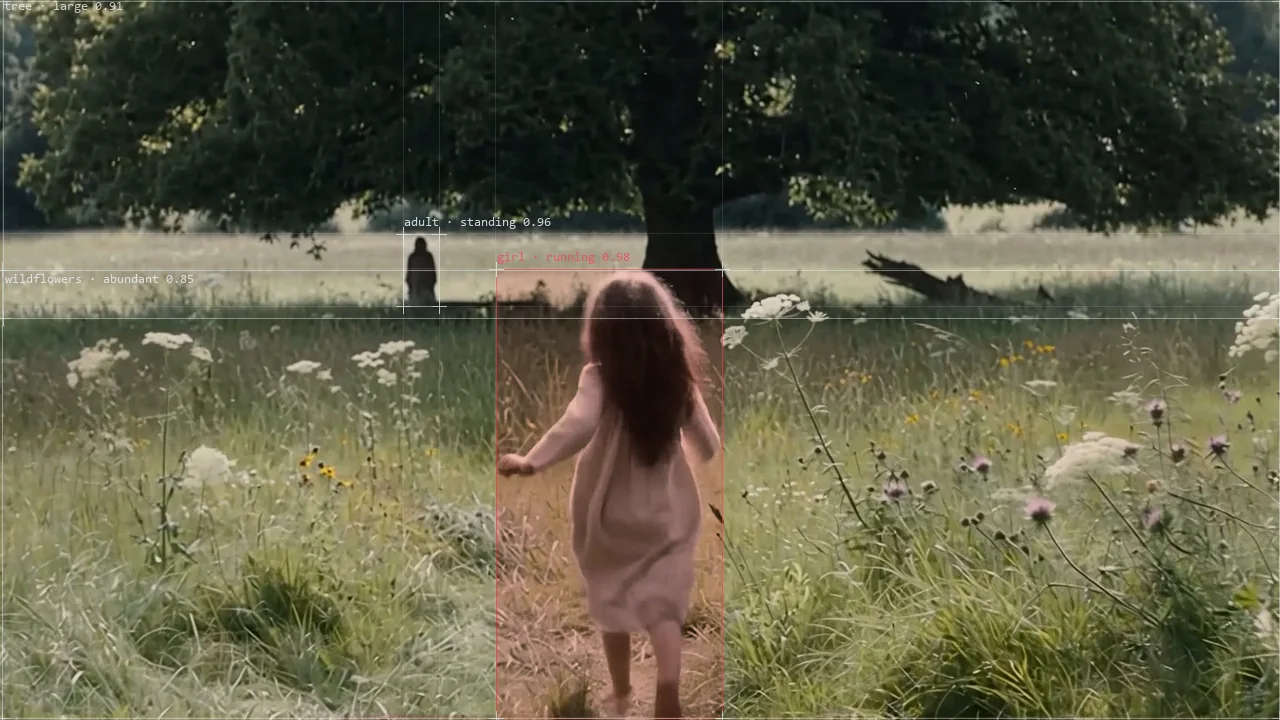
A girl in a linen shirt lies on bare floorboards in a dark room. She gets up, touches the edge of a wooden table, lifts a tin cup, steps to a door left ajar and finally runs into a summer meadow towards a single old tree. That is almost all that happens in URSULA, the two-and-a-half-minute film Michał “OverJK” Owerczuk made alone in the 24-hour final of the Machine Cinema GenJam Director’s Cup. The judges ranked it first in the final, and the official tournament hub lists it as the number one film of the cup, ahead of The Last Unemployed and SIREN, both also from Poland.
A 16th-century lament in a 24-hour sprint
The title card says it plainly: the film is inspired by the Laments of Jan Kochanowski (1580) and by Bolesław Leśmian’s poem Urszula Kochanowska (1936). Kochanowski wrote his nineteen laments after the death of his two-and-a-half-year-old daughter Urszula; Leśmian, more than three centuries later, imagined her returning from heaven to the family home in Czarnolas. URSULA keeps both voices and adds almost no words of its own. It stays with the child, her hands, the wood and the light, and lets the grief come from what is missing in the frame.
The final brief made that harder, not easier. In the first three rounds of the Director’s Cup every team had four hours to make a finished film on a theme announced at the start. For the final the clock grew to 24 hours, but the films had to follow Kishōtenketsu, the four-part East Asian story structure of introduction, development, twist and reconciliation, in which the turn comes without open conflict. Owerczuk’s answer was a quiet one: the twist of URSULA is not an event but a change of light, the moment the dark interior opens onto the meadow.
“Technology was important, but in the end the idea, experience and the ability to tell a story won.”
He said that about the whole Polish campaign, but it reads like a description of this film. Earlier in the tournament, in a press statement published by BRIEF, he put it more directly: “The Director’s Cup proves that AI does not have to lead to uniform content. It can help creators tell stories that come from their own culture, experience and sensibility. Technology speeds up part of the process, but it does not replace the idea, the direction and the author’s responsibility.”
Poland’s best film in Poland’s best tournament
URSULA was the closing chapter of a run that made Poland the first champion of what Machine Cinema calls the world cup of AI storytelling. More than a thousand creators from over sixty countries registered, sixteen national teams reached the knockout phase and 510 films were made over the whole tournament. Poland beat France 3:0 in the round of 16, Nigeria 2:1 in the quarterfinal, the United States 2:1 in the semifinal and Indonesia 3:0 in the final. Every film was scored by a jury of about thirty people from the film, music, media and technology industries on five criteria: concept and story, use of AI, visuals, cinematography and editing, and overall impact. A country’s result was the sum of its three best films.
Owerczuk, who entered Poland into the tournament and captained the team, was named its MVP. He also competed solo in every round, which he explains with the time he spent helping the other Polish teams in parallel. In the final, three Polish films took the judges’ top three places.
Why the quiet film won
Machine Cinema’s final is judged in public, and the premieres were shown to the community on the day after the theme was announced. Next to the louder, faster entries, URSULA stood out for what it leaves out: almost no camera movement and no spectacle, only a child, a house and a meadow. Close-ups of a child’s face alternate with details of a peasant house, and the colour stays low until the last minute. It is the kind of film that only works if every frame holds, which is exactly what a 24-hour limit makes difficult.
The Polish press release that announced the win ended on a line that could stand under the film: technology made this championship possible, but the Polish victory showed something much more traditional, that in the end you still need a story worth telling.
You can watch URSULA in full above.
Original sources: Machine Cinema, Director’s Cup hub, aboutmarketing.pl and BRIEF (in Polish).
Source: Machine Cinema (opens in a new tab). Facts checked against the source on .